
DPAG Neuroscience Seminar: 'Plasticity of human astrocytes: How context-dependent reactivity is regulated and can drive diagnostic and therapeutic innovation'
Audience: Member of University - ALL Format: In Person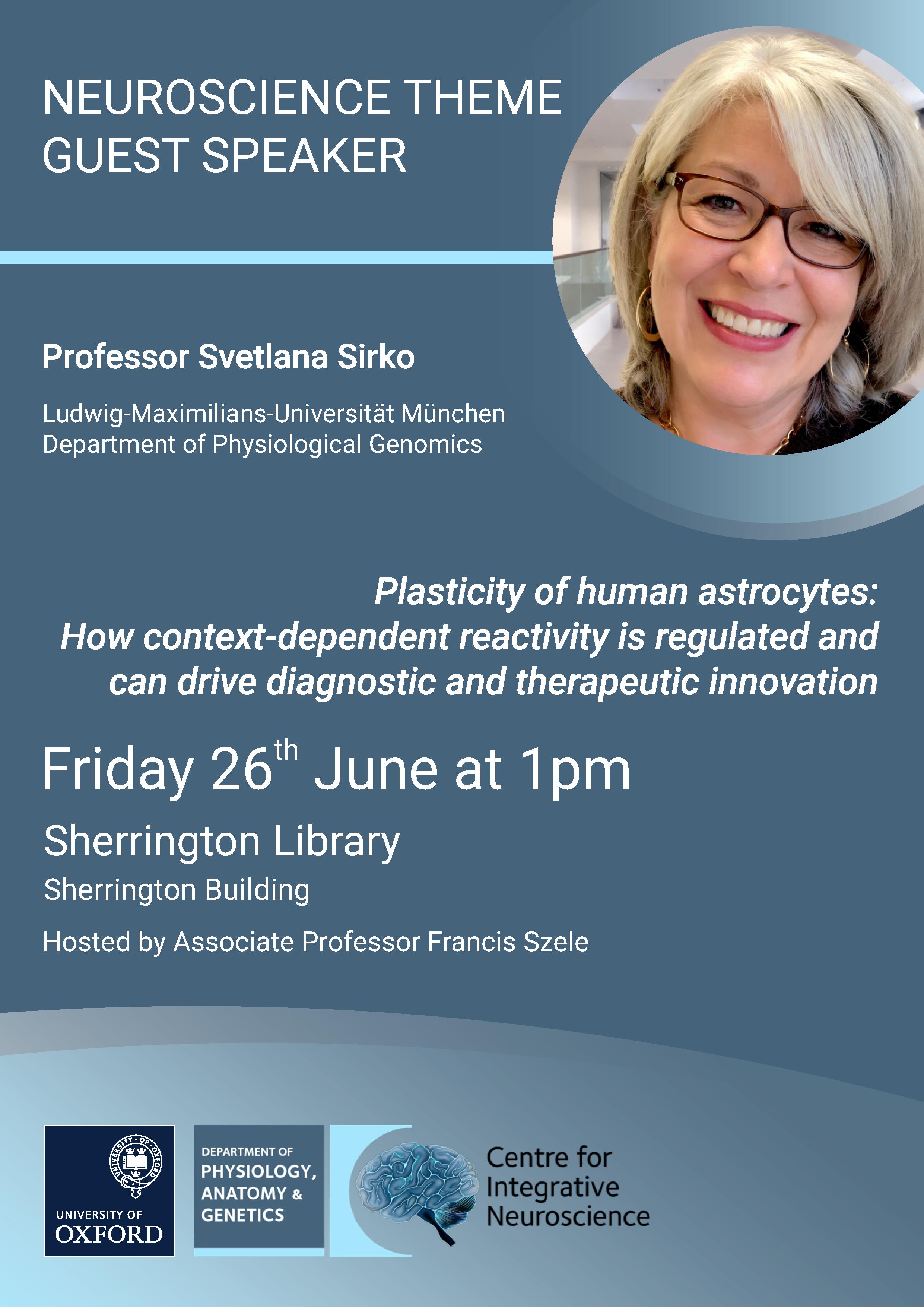
Friday, 26 June 2026, 1pm to 2pm
Astrocytes are highly heterogeneous and remarkably adaptable cells that reshape their molecular and functional identities in response to brain injury. Distinct astrocyte subpopulations within the human brain parenchyma exhibit reactive states that depend on their localization, the type of injury, microenvironmental cues, and exposure to modulators from non-neuronal sources such as blood and cerebrospinal fluid. By integrating multi-omic, spatial, and functional analyses across preclinical experimental models and patient-derived tissue samples, we are uncovering the signaling pathways that govern pathology-associated astrocyte plasticity, including those that regulate the emergence of stem cell properties after brain injury in mice and humans. Moreover, age-related modifications further influence the capacity of this endogenous regenerative cell source, underscoring the need to understand how context-specific astrocyte adaptivity can be fine-tuned across the lifespan. In this talk, I will discuss not only our recent findings showing that astrocyte plasticity can be targeted to unlock regenerative potential in the adult human brain, but also how this capacity may drive diagnostic and therapeutic innovation.
Speaker(s): Professor Svetlana Sirko (Ludwig Maximilian University of Munich)
Series: DPAG Neuroscience Seminars
Venue:
Sherrington Building - Sherrington Library
-
Sherrington Library Sherrington Building off Parks Road Oxford Oxfordshire OX1 3PT United Kingdom
Department: Physiology Anatomy and Genetics (Department)
Host: Associate Professor Francis Szele