
DPAG Neuroscience Seminar: 'Gene-environment interactions modulating brain function within and between generations'
Audience: Member of University - ALL Format: In Person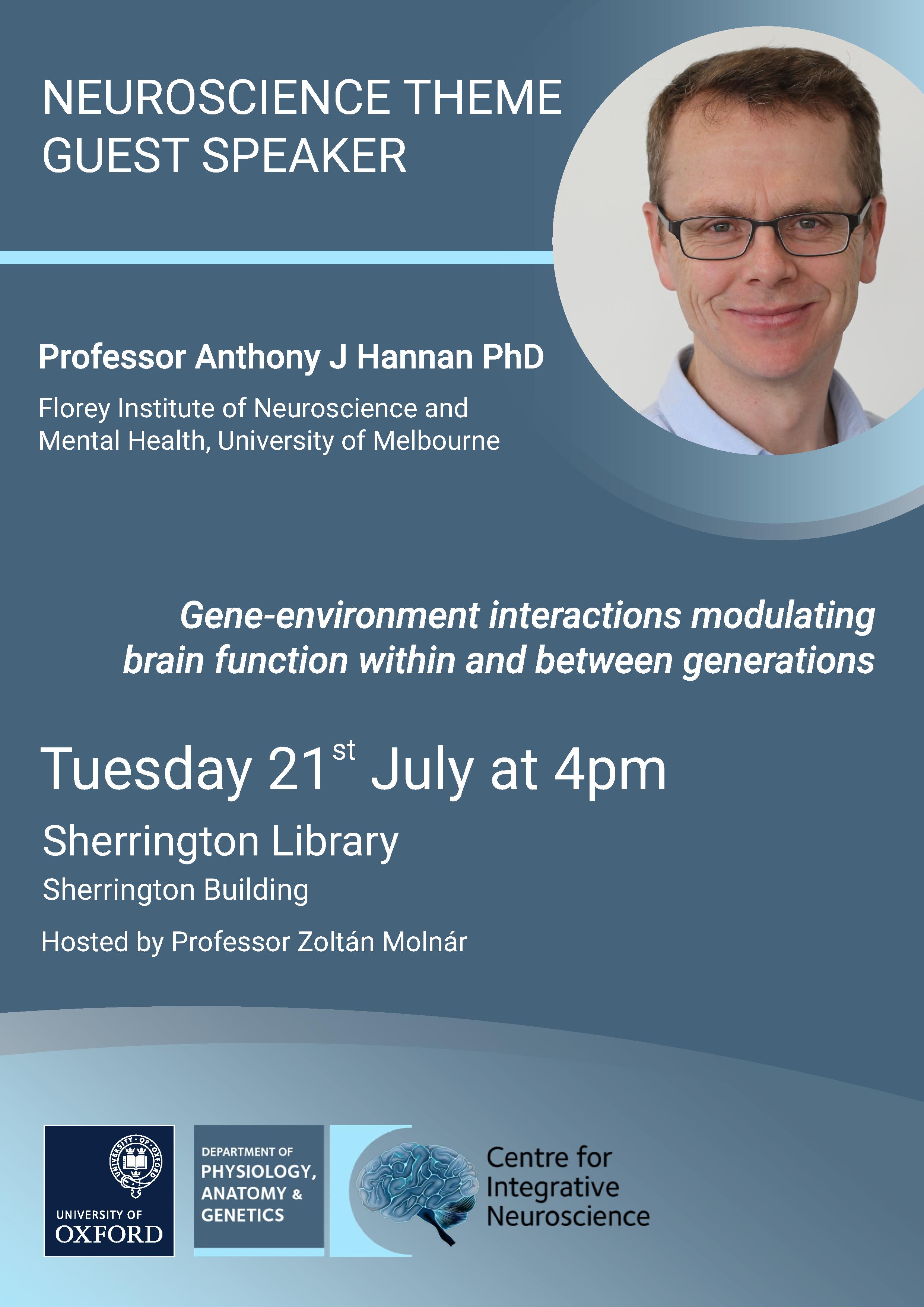
Tuesday, 21 July 2026, 4pm to 5pm
We are interested in how gene-environment interactions mediate and modulate brain function, in health and disease. Our findings have revealed key pathways implicated in the therapeutic impacts of environmental stimuli and identified novel therapeutic targets. We have also discovered altered brain-body interactions, including the first evidence of gut dysbiosis (dysregulated gastrointestinal microbiota) in Huntington’s disease (where we model depression, dementia and motor symptoms) and a genetic model of schizophrenia. Furthermore, we have shown that high-fibre diet and prebiotic interventions improved gut function and ameliorated cognitive and affective dysfunction. Ongoing studies are exploring the gut microbiome as a therapeutic target and the possibility that specific environmental factors may modulate brain function via microbiota-gut-brain interactions. These approaches to gene-environment interactions may facilitate the development of enviromimetics (including exercise mimetics as a subclass) for various brain disorders.
In order to understand how gene-environment interactions may sculpt brain development and function between generations, we have also been exploring epigenetic inheritance via the paternal lineage. We have discovered intergenerational effects of various paternal exposures, including exercise, stress, infection, immune activation, antibiotics and other drugs. These lifestyle factors and experiences modulate sperm noncoding RNAs and alter offspring phenotypes. We are exploring epigenetically mediated changes in the brains of offspring. The effects on offspring, including modulation of brain function and behaviour, via epigenetic inheritance, have particular relevance to the pathogenesis of depression and anxiety disorders.
Speaker(s): Professor Anthony Hannan (University of Melbourne)
Series: DPAG Neuroscience Seminars
Venue:
Sherrington Building - Sherrington Library
-
Sherrington Library Sherrington Building off Parks Road Oxford Oxfordshire OX1 3PT United Kingdom
Department: Physiology Anatomy and Genetics (Department)
Host: Professor Zoltan Molnar